Alibaba Bans Claude Code Over Backdoor Fears

Alibaba reportedly bans Anthropic's Claude Code across its workplace, citing backdoor risks that highlight the fragile trust in third-party AI coding tools. Kagi ships an AI toggle giving users a genuine off switch for AI search results, paired with curated ranking modes, while the open-source metasearch engine SearXNG offers a fully private alternative with no AI overlay by default. On the developer tooling front, a new proxy called Mcpsnoop brings Wireshark-style visibility to MCP calls, and o

|View details|

Google's €4.3 Billion EU Fine Sticks as Insiders Flag Deeper Cultural Crisis

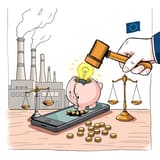
Google loses its final EU antitrust appeal and faces a €4.3 billion fine over Android bundling, while a departing VP's farewell letter accuses leadership of losing its moral compass. Infineon opens a five-billion-euro chip plant in Dresden, advancing Europe's push for semiconductor autonomy. Japan's top court rules AI cannot be listed as a patent inventor, Spain blacklists Palantir from public contracts, and Virginia bans warrantless geolocation data sales. Plus: a Linux LUKS encryption bug, the

Sony Kills Blu-ray Discs While Deleting Purchased Movies

Anthropic launches Claude's Fable 5 model with free promotional access, letting anyone compare it directly against GPT-4o and Gemini — though the window is time-limited. In a landmark for synthetic biology, scientists unveil SpudCell, the first cell built entirely from a synthetic genome that can grow and divide on its own internal clock. We also unpack IPFS's 10x faster publishing, a new FFmpeg AAC encoder that improves streaming audio quality, a vulnerability in Apple's Hide My Email feature,

Sonnet 5 Drops, Claude Science Opens the Black Box, and Amazon's Bribery Economy

Anthropic launched Claude Sonnet 5 alongside a new research division, Claude Science, which gives external safety researchers early access to probe for risks before public release — and partners already flagged some bio-capabilities that were stripped from the public model. We also cover a seller's account of an internal Amazon bribery network that deletes real negative reviews and sabotages honest competitors. Plus: Zluda 6 opens the door to running CUDA apps on non-Nvidia GPUs, a Virginia coun

South Korea's Trillion-Dollar Chip Bet Meets a US Price-Fixing Lawsuit

South Korea is pushing a trillion-dollar memory chip expansion while Samsung, SK Hynix, and Micron face a US price-fixing suit over alleged DRAM collusion. A federal appeals court ruled that suspicionless geofence warrants violate the Fourth Amendment, raising the bar for law enforcement dragnets. Rocket Lab is buying Iridium's satellite business in a carve-out that turns the launch company into a full-stack communications provider overnight. Developers get a boost from Ornith-1.0, an open-sourc

AI Boom Bubble Risk, Age Verification Rails, and a Space Shuttle Wiring Trick

Central bankers warn that the concentrated AI investment boom could inflate asset prices to the point of triggering a global financial crash. The episode also covers evolving digital surveillance: from age verification laws building identity infrastructure to Flock cameras creating searchable vehicle fingerprint databases. In geopolitics, Austria courts Anthropic as a safe harbor while Google bars Meta from military use of Gemini — pulling AI access in opposite directions. Additional stories inc

Someone Dumped a Dozen Zero-Days on GitHub and Dared the Internet to Patch Them

An anonymous GitHub account drops over a dozen claimed zero-day exploits, with early checks confirming several are real and unpatched — dividing the security community between alarm and a keep-calm-and-patch response. A wave of Asian AI startups releases open models that match the Mythos mixture-of-experts recipe, erasing its architectural advantage. The Commerce Department hits Polestar with a 100% tariff on national-security grounds while sparing Volvo, despite both brands shipping from the sa

Frontier Access Becomes Government-Brokered

This edition covers a major shift in frontier AI access, where both Anthropic's Mythos release and OpenAI's GPT‑5.6 Sol now route access decisions through the US government rather than the labs themselves. Also: Sony is deleting 551 paid movies from PlayStation libraries due to expired licensing deals, California revived its controversial 3D-printer watermarking bill, and the performance gap between open-weights and closed-source LLMs is widening on hard reasoning benchmarks. Plus, the UK switch

UN Inquiry: Israel Deliberately Targeted Children in Gaza

A UN inquiry concludes Israel deliberately targeted children in Gaza, calling it genocide. Meta pauses an internal employee-tracking program after its data leaks. Anthropic releases Claude Tag to defend against prompt injection attacks, and Madison Square Garden's parent company compiled a dossier on anti-facial-recognition activists. California quietly passes a law that may ban 3D printers in schools and colleges. Plus: Germany's nationwide train halt from a single radio failure, why age verifi

|View details